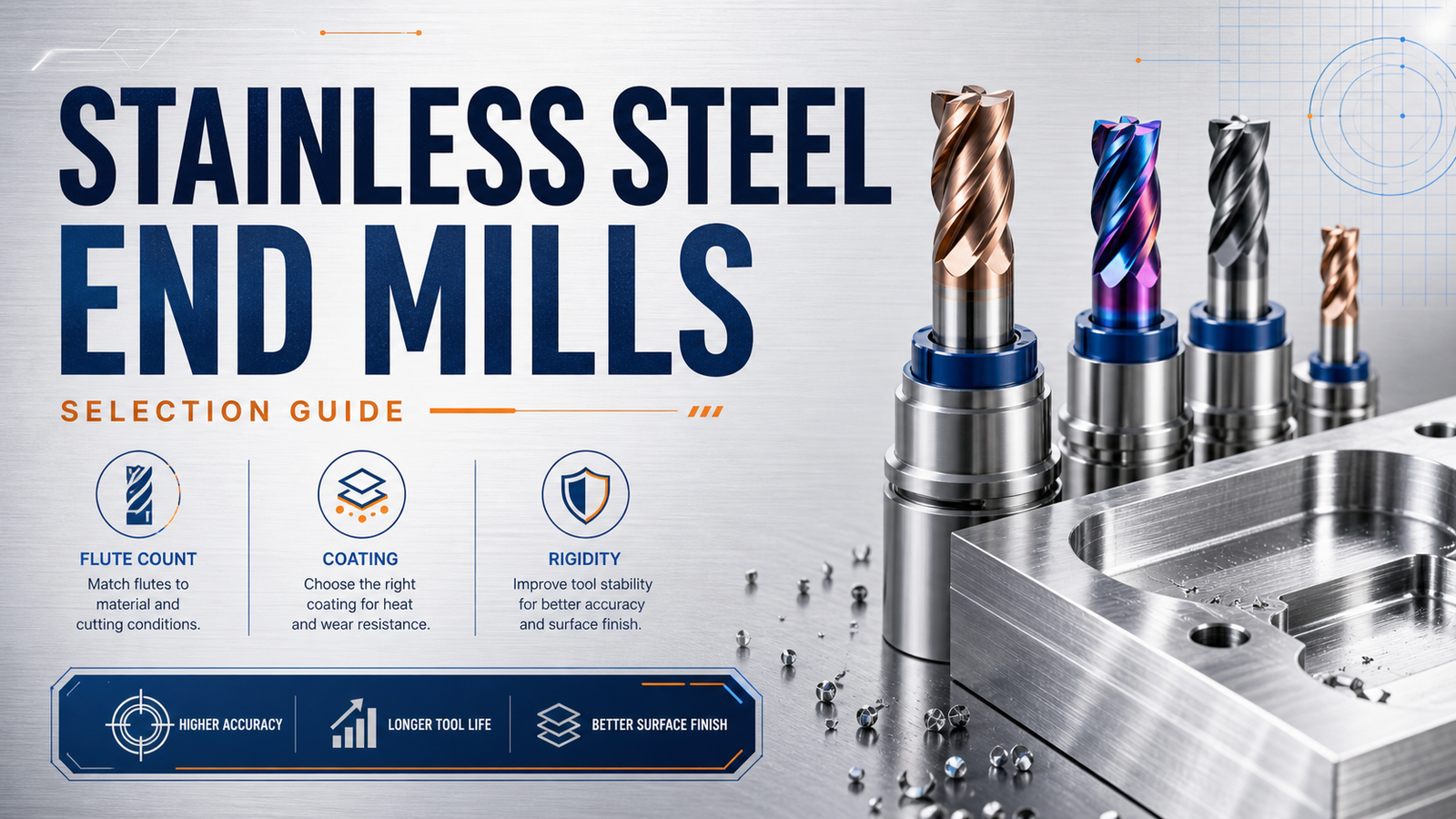
Choosing the right end mill for stainless steel is important for stable cutting, longer tool life, better chip control, and improved surface finish. This guide explains what to consider when selecting carbide end mills for stainless steel machining.
Why Stainless Steel Is Difficult to Machine
Stainless steel has high toughness, poor thermal conductivity, and a tendency to work harden during machining. These properties can increase cutting heat, accelerate tool wear, and make chip evacuation more difficult.
Recommended End Mill Geometry
For stainless steel, carbide end mills with strong cutting edges, optimized flute geometry, and proper chip space are usually preferred. A rigid setup and suitable tool length also help reduce vibration.
| Feature | Recommendation |
|---|---|
| Flute Count | 4-flute or variable flute end mills |
| Tool Material | Solid carbide |
| Cutting Edge | Strong edge preparation |
| Tool Length | Use the shortest possible overhang |
Best Coatings for Stainless Steel
Coatings such as AlTiN or TiAlN are commonly used for stainless steel because they provide better heat resistance and wear protection. The right coating depends on cutting speed, coolant condition, and machining strategy.
Speeds and Feeds Tips
- Use stable feeds to avoid rubbing and work hardening.
- Reduce excessive heat with proper coolant or air blast.
- Avoid using too much tool overhang.
- Adjust cutting parameters based on machine rigidity and tool diameter.
Send us your material, size, and machining requirements.
Our team can recommend carbide end mills, coatings, and custom tool options.
Ask Technical SupportCommon Mistakes to Avoid
Common problems include using the wrong coating, feeding too slowly, applying excessive cutting depth, or using a tool with too much overhang. These issues can cause chatter, poor surface finish, premature wear, or tool breakage.
FAQ
What type of end mill is best for stainless steel?
A solid carbide end mill with a strong cutting edge, suitable coating, and stable flute geometry is usually recommended.
Is AlTiN coating good for stainless steel?
Yes. AlTiN is often used for stainless steel because it performs well under high heat and helps improve wear resistance.
Why do end mills wear quickly in stainless steel?
Stainless steel generates heat and can work harden, which increases cutting force and accelerates tool wear if parameters are not properly controlled.